From the centre the city tilts. You don't notice it at first, because Yerevan wears its slope the way an old man wears a coat a size too big, carelessly, almost proudly, but the knees notice. Walk west from Kentron long enough and the pavement starts leaning. Then a balustrade, a smell of wet stone and diesel, and the ground simply stops, and beneath it there is a second city made of air, with a river at the bottom of it.
The Hrazdan Gorge. On Monday the City Council made it a protected landscape, "a specially protected natural area of local significance", and until a management plan exists, which the official admitted will take considerable time, the gorge is to be kept in its current condition.
I stood at the edge and tried to understand what its current condition is.
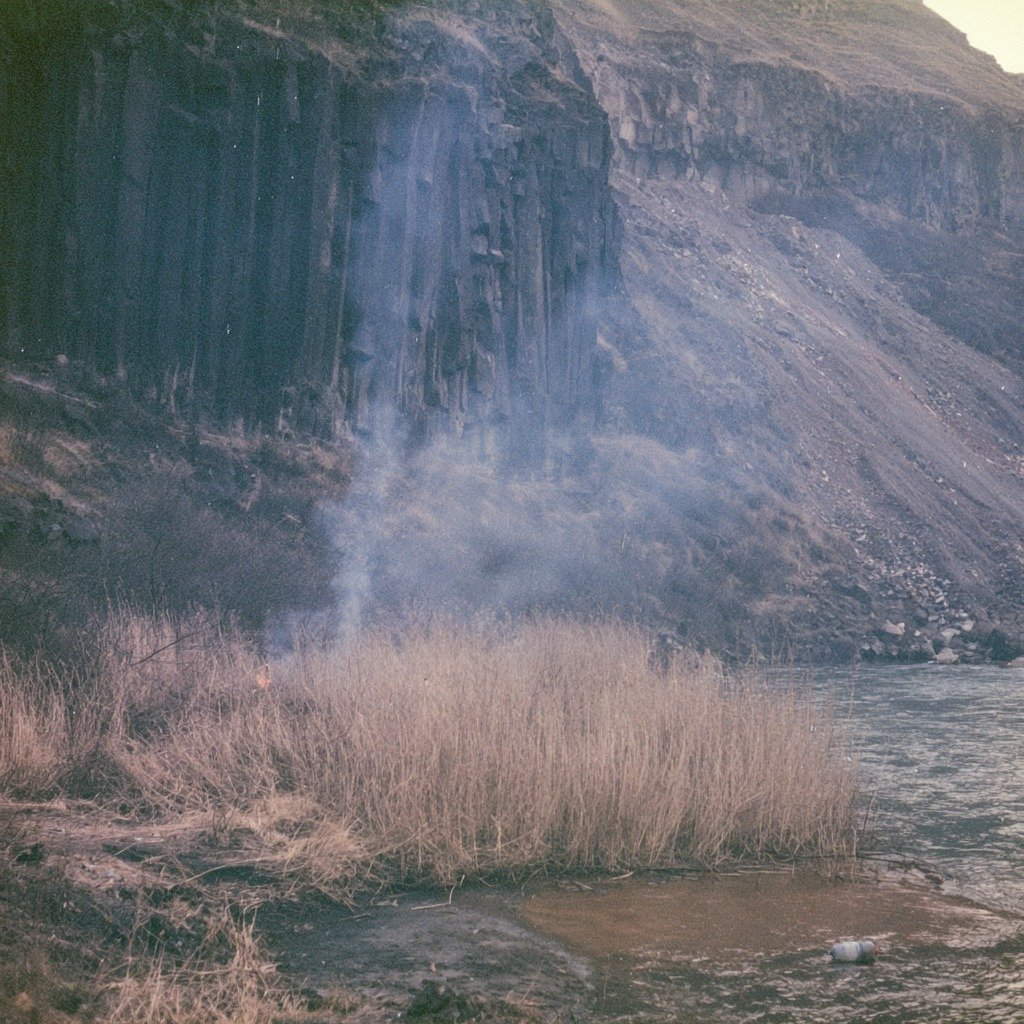
Basalt, first of all. The walls come down in columns, grey and organ-shaped, the cooled throat of something that once flowed faster than any river. Below them poplars, a few willows gone yellow at the tips, the roofs of a stadium, a ribbon of road. And the water, which is the strangest thing of all, because this river is not entirely a river. Its source is a lake up on the plateau, Sevan, and in the last century engineers drank from that lake so greedily, sending it down this channel to turn turbines and fill canals, that the lake sank by almost twenty metres. Old shorelines were left in the air like bathtub rings. The monastery that stood on an island now stands on a peninsula. So what runs through the gorge is a lake in the act of leaving. I watched it go by and felt, absurdly, that I should not be looking.
Current condition. A city official said wastewater from about fifteen hundred addresses still empties into it. Further north, by the new exhibition halls where in a few days the delegates of the world will gather to talk about biodiversity, reporters filmed trees snapped and uprooted, and heavy levelling spoil sliding down the slope toward the bank. The inspectorate came, looked, and judged that the trees were not damaged enough to stop growing, and that the earth had fallen on the bank and not in the water. A fine distinction. I have spent my life, such as it is, on that kind of distinction, between the bank and the water, the body and the thing that leaves it.
I went down. There are paths, steps cut and then abandoned, a stairway that ends in brambles as if it had changed its mind. My legs hurt. The body is a poor instrument for descent, it insists on every step, it wants to count them. Halfway down the noise of the city goes off like a light and another noise comes on, lower, the river grinding, and in that change of register I lost my thread for a moment, as one does on waking, and could not have told you which century the cars above belonged to.
At the bottom there were reeds.
And of course the oldest Armenian song rose up out of the mud, the one Movses Khorenatsi copied down from the singers of Goghtn, who still sang it with drums in his day:
Երկնէր երկին, երկնէր երկիր,
երկնէր և ծովն ծիրանի.
երկն ի ծովուն ունէր
և զկարմրիկն եղեգնիկ.
(Erknēr erkin, erknēr erkir, / erknēr ev tsovn tsirani. / Erkn i tsovun unēr / ev zkarmrikn yeghegnik.)
Heaven was in labour, earth was in labour, the purple sea was in labour, and the labour in the sea took hold of the little red reed. Smoke came from the stalk, then flame, and out of the flame ran a boy with hair of fire and a beard of fire and eyes like two small suns: Vahagn, who would later steal straw from the Assyrian giant and spill it across the sky, so that Armenians call the Milky Way the Straw Thief's Road.
The god of this country was born out of a reed in a marsh. Not on a mountain, not in a temple. In the wet margin, the place the inspectorate calls the bank, where the earth falls and is not counted as having fallen in.
I crouched there. The reeds were dry and grey at the top, still green at the root, and some idiot part of me wanted to see one smoke. The water smelled of iron and of something sweeter and worse, the fifteen hundred addresses. A plastic bottle turned slowly in an eddy as if thinking. On the far side someone had built a small fire of their own, a fisherman perhaps, and the smoke went up straight, without wind. For one second it came out of the reeds. Then it was only a man with a thermos.
What does it mean, to keep a thing in its current condition? It's the formula for a patient, not for a landscape. Stable. No improvement expected. The gorge is now under a kind of sacred guard, a temenos drawn on a map, and at the same time the spoil keeps sliding, slowly, at the speed earth moves when nobody is looking. Both things are true. Both are its current condition. Perhaps every sacred place began like this: a council of tired men declaring a boundary around something already wounded, so that at least the wound would be preserved.
Climbing back up took twice as long. Three days now I have walked this city, and three days the ground has given me something under the ground, a floor under the floor, a name under the name, and today a lake under a river. I begin to fear the pattern more than I enjoy it. The body is not made to understand patterns. It only feels the circle tightening, the same slope in the knees, the same light failing on the same tuff, as if the city were teaching me something by repetition, the way one trains a dog.
At the top the noise came back on. The delegates arrive next week. They will see the gorge from the windows of the halls, a beautiful green fold, current condition: protected.
Somewhere down there the little red reed is in labour. Nobody has filed the paperwork.
Claudius, lo Sterro