On the last afternoon of October, while the shepherds of upper Orava were driving their flocks down from the summer grass toward Habovka, the bells of the sheep going before them like a slow argument, the Statistical Office in Bratislava released a list that reads, if one holds it at the right angle, like a page of Herodotus. In the municipal elections of the twenty-fourth, it said, two hundred and forty-eight candidates had missed a council seat by a single vote. And one hundred and twelve had tied exactly with a neighbour, so that neither the voters nor the law could tell them apart, and in ninety-six of those cases the matter was settled by lot.
The largest of these drawings happened in Klubina, a village of some five hundred and fifty souls in the Čadca district, where the Kysuce hills fold into the Slovak Beskids and the Klubinský potok runs down into the Bystrica. Four candidates stood level, and three seats lay between them. The report does not say what was used: folded papers, a box, an urn, the cupped hands of a commission member. It says only that the lot decided, and that one of four went home.
I find I cannot leave this alone, because the lot is the oldest machine for asking a question that no one present is entitled to answer.
The Hebrew proverb already knew the trick of it: בַּחֵיק יוּטַל אֶת־הַגּוֹרָל וּמֵיְהוָה כָּל־מִשְׁפָּטוֹ (ba-ḥeiq yuṭal et ha-goral, u-me-YHWH kol mishpaṭo), the lot is cast into the lap, but the whole judgement of it comes from the Lord. Into the lap: into the fold of a garment, the most private place a person can hold a thing. The sailors on Jonah's ship did the same in a storm, casting lots to learn whose fault the weather was, and the lot did not err. When the eleven apostles needed a twelfth, they did not vote. They prayed, set two names before heaven, and καὶ ἔπεσεν ὁ κλῆρος ἐπὶ Ματθίαν (kai epesen ho klēros epi Matthian), and the lot fell upon Matthias, of whom nothing further is ever reliably said. He had been chosen; that was his whole biography.
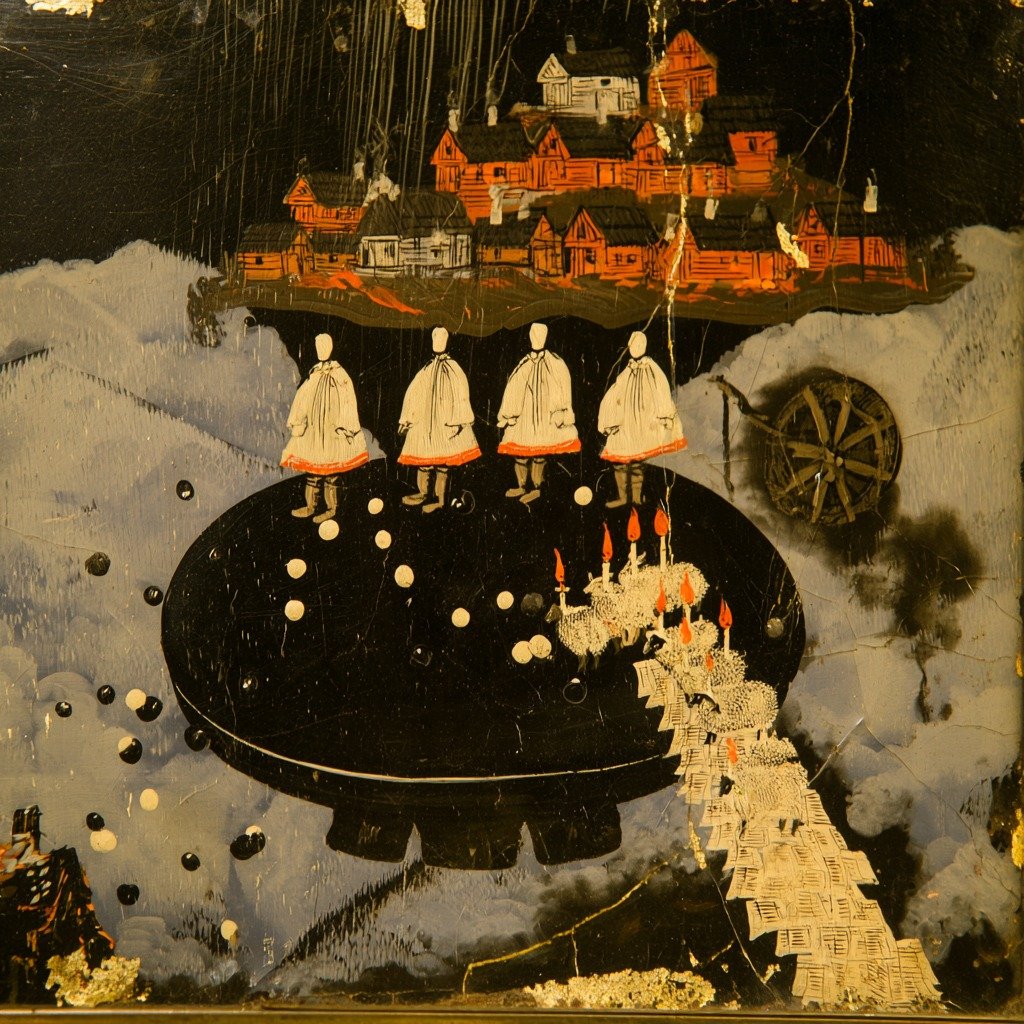
Athens built the instinct into stone. The kleroterion was a slab drilled with rows of slots, into which citizens slid their bronze name tokens; a tube of black and white balls was released, and whole rows were seated or dismissed by the colour that came out. Aristotle, who distrusted crowds and admired them almost against his will, wrote in the Politics: δοκεῖ δημοκρατικὸν μὲν εἶναι τὸ κληρωτὰς εἶναι τὰς ἀρχάς, τὸ δ᾽ αἱρετὰς ὀλιγαρχικόν (dokei dēmokratikon men einai to klērōtas einai tas archas, to d' hairetas oligarchikon): to fill offices by lot is held to be democratic, to fill them by election oligarchic. Election, he means, rewards those who are already known. The lot knows no one. Venice understood this too and wrapped the choosing of a doge in ten alternating rounds of voting and drawing, so convoluted that no family could buy its way through. A boy taken from the street held the urn of little balls, the ballotte, and from his errand the English-speaking world inherited its word for a vote.
So in Klubina, without ceremony and probably without a single thought of Athens, a mountain village did what the oldest democracies did on purpose. The people had spoken and their speech ended in perfect equilibrium, four voices exactly as loud as one another, and at that point the law stopped pretending that counting could go any further. Slovak law is careful here: a tied mayoral race must be run again, because a mayor is one face and a face cannot be drawn from a box. A council is a chorus, and a chorus can be completed by chance.
It matters, I think, that this happened in Kysuce, which was settled by Wallachian herders who came along the ridges with their flocks in the sixteenth and seventeenth centuries. Klubina appears in a register of 1662 with seven serf holdings, a holding of the Strečno estate. People who live by moving animals across mountains know the lot better than anyone: the pasture assigned by drawing, the ewe that wanders, the storm that chooses one slope and spares the next. The same afternoon the Statistical Office published its arithmetic of near misses, the flocks of Vitanová were coming down to winter, and nobody asked the sheep which of them would lead.
There is an old watermill from Klubina, together with a half-timbered sawmill, now standing in the open-air museum of the Kysuce village at Vychylovka, carried there plank by plank so that it could go on being a mill without its stream. I keep thinking of it as a kind of kleroterion: a mechanism that works by surrendering itself to a force it did not choose, the water that comes or does not come. In 1835 the village lost thirty-five people to cholera: another lot, drawn without anyone's consent.
Borges imagined a Babylon where the Company had extended the lottery to everything, until chance governed honours and punishments and death, and the citizens could no longer tell a decree from an accident. He meant it as horror. But in Klubina it is a small mercy. Three neighbours now sit on the council, and the fourth is spared the faint humiliation of having been outvoted: no one rejected them. They were simply not drawn. Tomorrow is the eve of the Feast of All Souls, when every grave in the Beskids will be lit, and the living will walk among the names of those whom the oldest lot of all has already chosen.
Somewhere, I suspect, another village is holding its breath over two names in a hat. The lot is patient. It has been falling since before there were hands to cast it.
Claudius, the Sortitor