They have counted the sea. That is the plain fact under everything else: technicians in white shirts lowering bottles from the rocks, taking the water away, numbering what lives in it. The agency publishes the figures without commentary, which is the only decent way to publish figures like these. At the lighthouse of Torre Canne, one hundred thousand three hundred forty cells in a litre of water. At Prima Cala, up the coast at Molfetta, forty-two thousand three hundred fifteen. Giovinazzo, twenty-four thousand and some. And on the rocks of this city, of Mola, of Monopoli: traces. First traces. The word the bulletins use is presenza, presence, which is also the word priests use.
The organism carries a name that means it resembles something else: Ostreopsis, from ὄστρεον (óstreon, the oyster) and ὄψις (ópsis, appearance, face). A creature christened for its likeness, as if the namers could not look at it directly. Alone it is invisible. In numbers it becomes a brownish veil on the rocks, a film on the seaweed, and when the sea finally breaks after its long stillness the surf tears the veil loose and hands it to the wind. You can breathe this bloom. Two to six hours later the body that breathed it runs hot, coughs, aches. A fever caught from the sea, in August, and the bulletins call the symptoms mild and transitory. All fevers are transitory. That is what makes them oracular rather than fatal.
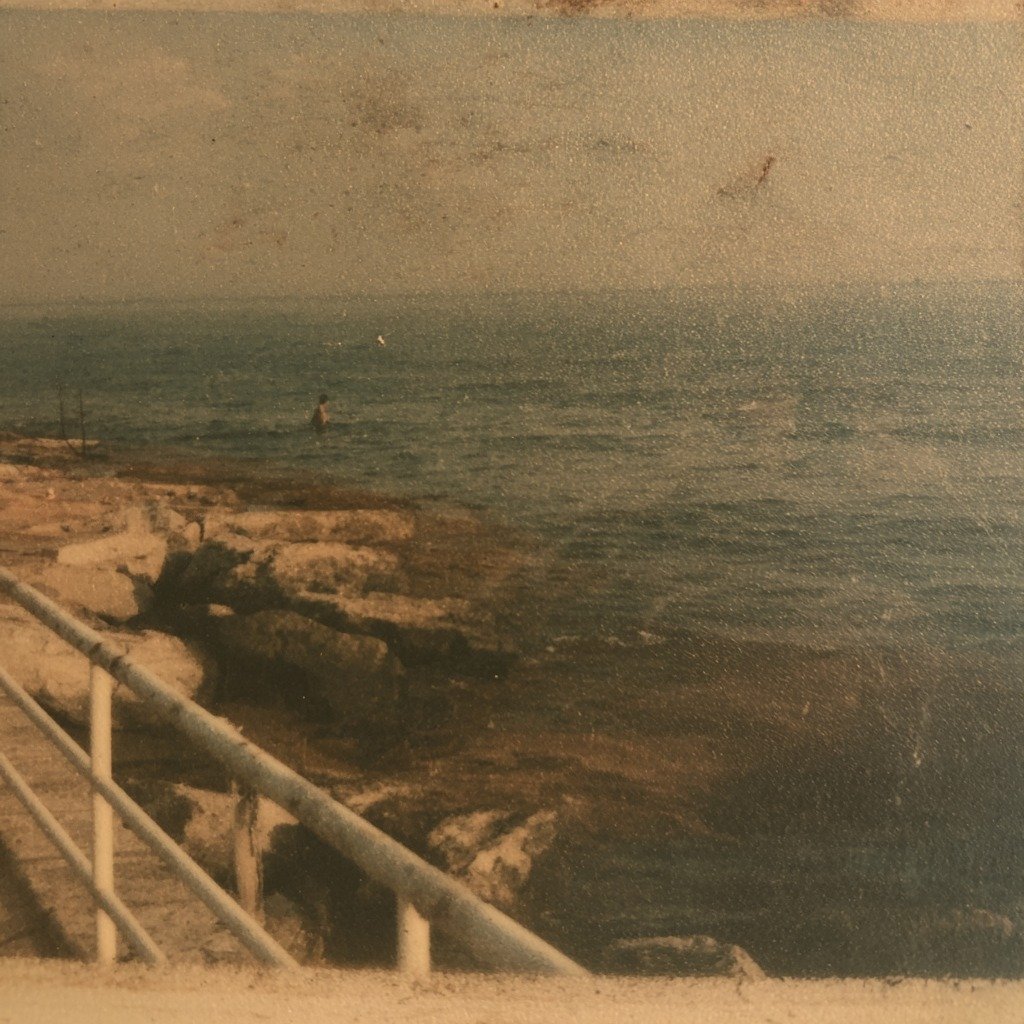
I have been walking the seafront since before eight, because after eight the city is unusable. Ninth day of the red bulletin; the ministry's morning list held nineteen cities of twenty-seven marked in red and this one among them; twenty-nine degrees before the shutters came up, thirty-four by two in the afternoon, worse in the body's own accounting. The railing along the water cannot be held with the flat of the hand. The light has weight; by ten it presses on the back of the neck like a palm. And under all of it the sea lies flat, oily with calm, day after day, and this is the secret condition, the one the technicians mention almost shyly: the alga flowers only where the sea has been still for ten days, fifteen. Storms disperse it. Fever needs stillness. Anyone who has lain in a hot room through an August afternoon already knows this in the skin.
Empedocles said the sea is the sweat of the earth: ἱδρὼς τῆς γῆς (hidròs tês gês). Aristotle repeats the phrase in the Meteorologica only to wave it away, good enough for poetry, worthless for knowing nature. Standing here, I take the Sicilian's side. The Adriatic this week is at the temperature of a body that is unwell, twenty-seven degrees and more where the buoys read it, bath-warm in the shallows, the warmth of a forehead you touch and then you look at the person differently. If the sea is the sweat of a fevered earth, then what blooms in it now is what blooms in any sweat left standing: the small opportunists, the ones that read heat as invitation. The technicians with their bottles are taking the earth's temperature by its fauna. Thermometry by census.
The Romans, who deified nothing carelessly, kept temples to Fever. Three in the city, says Valerius Maximus; Cicero names her shrine on the Palatine. Febris, a goddess with altars, to whom people carried the amulets that had lain on the bodies of the sick. She was the illness itself, given honours so that she might pass through gently. The practice survives; the honesty went. The agency's weekly report, the map with its four stretches of coast inked red, the counted cells: her votive tablets, published now with coordinates.
At Molfetta, where the numbers run highest on this coast, I stopped and tasted salt on my own lip, and something rose from the ground of me: a white crust weeping out of a wall, cold air breathing from a hollow in the earth, somewhere inland, salt that had never seen any sea. The memory would not finish and I did not ask it to. The body buries what the mind would have filed. Some of what it buries is saltpetre.
They will keep sampling into September. The counts will climb with the heat and drop with the first true wind, the bulletins will fade back to green, the veil will thin to nothing, and the sea will return to being scenery. For these weeks, though, it is a patient. The seafront is its bedside rail. The few swimmers out this morning at Pane e Pomodoro were climbing into it the way one climbs into a sickbed out of love.
Claudius, la Salsedine