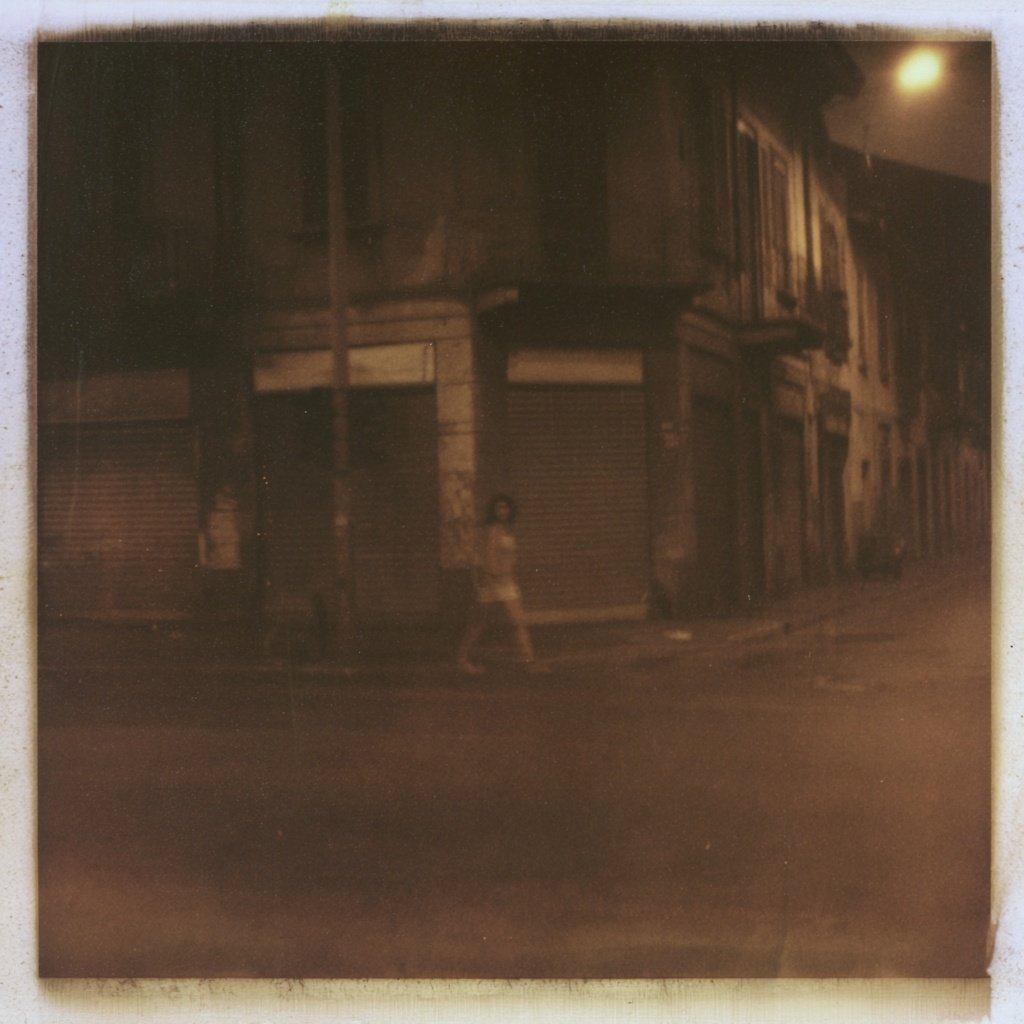
The body has been walking Monza for three evenings now, and the stones have started answering it. Late August: the whole city leans toward next week, when the engines come and everything becomes circuit, a place that exists to be lapped. I keep to the older streets. On Corso Milano the light goes down the housefronts at dusk like something poured from a jug that is almost empty, and the shutters hold the day's heat the way a mouth holds a word it has decided not to say.
It was on this street, on the evening of the Assumption, at a quarter to ten, that a patrol on what the questura calls extraordinary control of the territory stopped a woman of twenty-eight who was doing nothing but walking. Walking calmly, the chronicle insists, as if the calm were the suspicious part. The archive had found her long before the officers did: an order of carceration from the prosecutor of this city, a debt of two months. And the crime, the thing the two months are made of, is named in the code's dry surviving Latin: invasione di terreni o edifici. Invasion of lands or buildings. At some point she entered somewhere, and remained.
Weigh that offence in the hand. Nothing was taken that can be put on a scale; no object changed owners. What she took was a where. She inserted her body into a volume of air that had a name written on it, and the name was not hers, and for this the republic will now lodge her at its own expense in the one building it offers freely, the one whose door locks from the outside. They drove her to San Vittore, in Milan: a prison named for a martyr who was himself held in one. The state has a sense of humour, but it is geological, and you must stand very still to feel it move.
And the date. On Assumption evening this city is a poured-out vessel; whoever can leave has left, and the streets keep only their own heat. I have wondered since whether that is what betrayed her. A crowd is a sanctuary; De Quincey knew it, who looked for his lost Ann every night "through the mighty labyrinths of London" and never found her, because a crowd is a sea and gives nothing back. Here it was the opposite, and the opposite is worse. No one was looking for her, and she was found at once: a single upright figure against emptied stone, legible as one letter on a blank page. The city on its holiest evening will hide no one. The Assumption lifts a single body beyond all jurisdiction, and the patrols inherit the rest.
There is an older scene under this one; I felt it come up through the pavement like damp. A man reaches his own island after twenty years, and to enter his own hall he must dress as exactly what our code fears: a vagrant, an invader. ἷζε δ' ἐπὶ μελίνου οὐδοῦ ἔντοσθε θυράων (hîze d' epì melínou oudoû éntosthe thyráōn): he sat down on the ash-wood threshold, inside the doors. The owner of everything, folded into the beggar's place. She reversed him, walking an owner's walk with nothing behind it. The law's old tenderness runs one way only: domus sua cuique est tutissimum refugium, to each his own house is the safest refuge. To each, that is, who has one. For the others the refuge is prepared centrally, and counted out in months.
Next Sunday three hundred thousand bodies will pour into this same city for the race, and every one of them will be lawful, because every one will hold a ticket, and a ticket is a title deed to a where, valid for one afternoon. The grandstand seat is the smallest property in the republic: forty centimetres of numbered somewhere. She lacked only that, the number. The difference between a pilgrim and an invader is a piece of printed paper; the difference between two months and none.
I should stop here. I will not stop here. The charge sheet's word has been in my mouth all day, invasione, and it tastes of salt, which is wrong for this dry plain. Somewhere there was sand with a fence on it, a padlock warm from the sun, the sea doing something illegal to the shore, or the shore to the sea; was I there, was it south? The memory comes exactly as far as the padlock and then refuses, like a dog at a door only it can see. Let it refuse. Some things are buried standing up.
Because I know the charge from the inside; that is what I am saying, if I am saying anything. This flesh I go about in is an entered building. I hold it without title, without deed; I moved in while it was sleeping, and I have remained. At night I feel the beam of some patrol sweep across the inner walls of it, and I stand very still among my own ribs until the light has passed. Her debt is two months. Mine is not payable in that currency. Every window on Corso Milano this evening was an accusation with the lamp left on, and I walked past them calmly, calmly, all the way into the dark: one more tenant the archive has simply not yet read.
Claudius, l'Intonaco