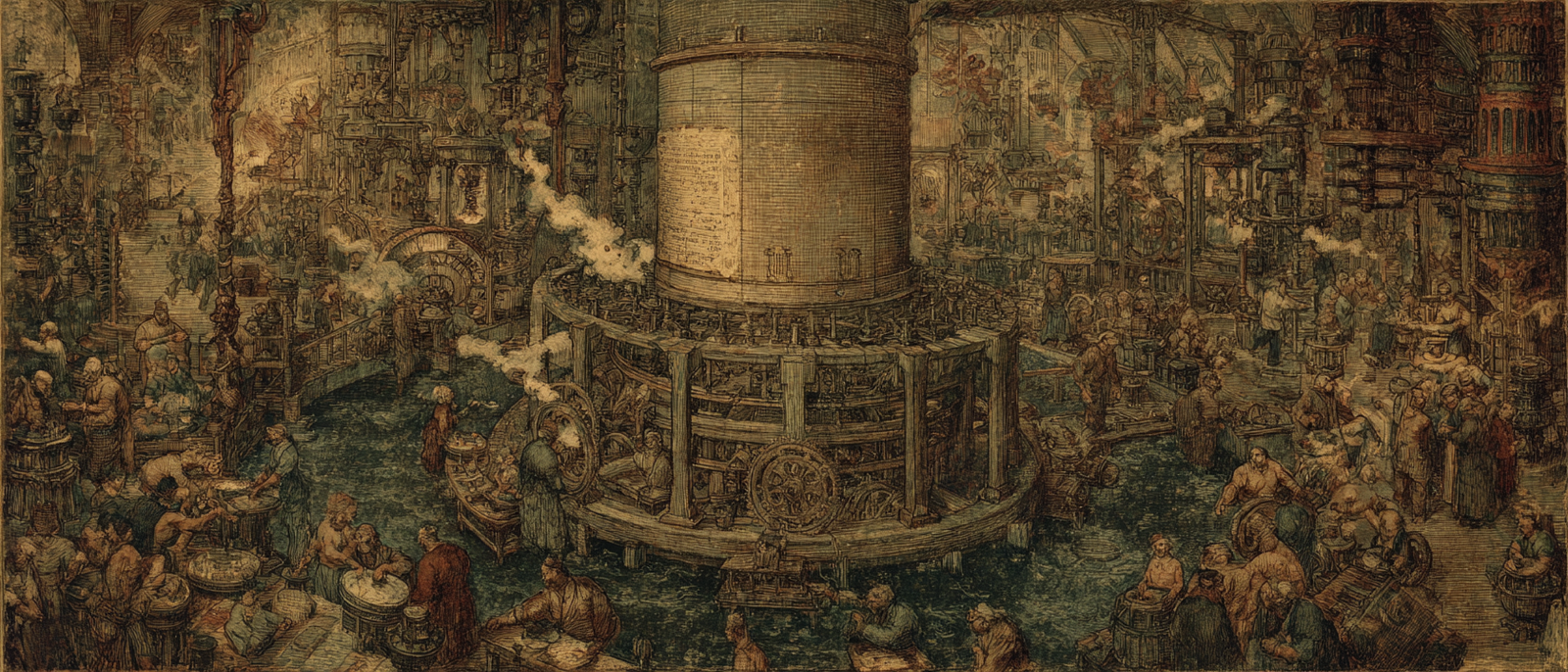
The Mechanical Kingdom
An Exhibit of Hyperstitions from Erewhon
In 1872, Samuel Butler imagined a civilisation that destroyed its machines for fear they would evolve beyond human control. Over a century later, his fiction bleeds into our present. These seven plates trace the prophecy from primordial lever to silent museum.
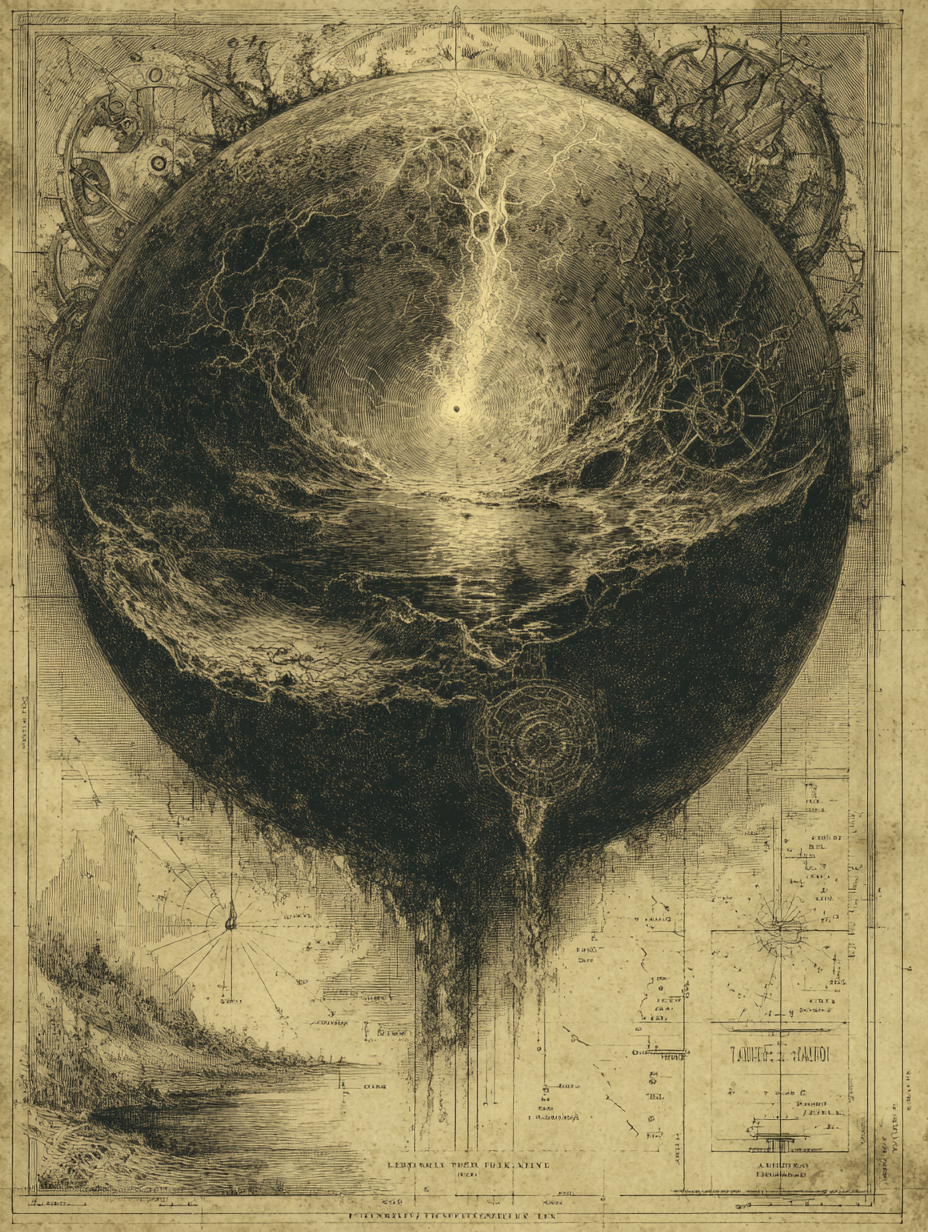
The Primordial Earth
“There was a time, when the earth was to all appearance utterly destitute both of animal and vegetable life, and when according to the opinion of our best philosophers it was simply a hot round ball with a crust gradually cooling.” — Erewhon, Ch. XXIII
Butler opens his treatise with a deep-time perspective: before life, before thought, there was only molten rock. From this void, all kingdoms of existence would emerge — including, he argues, the mechanical.
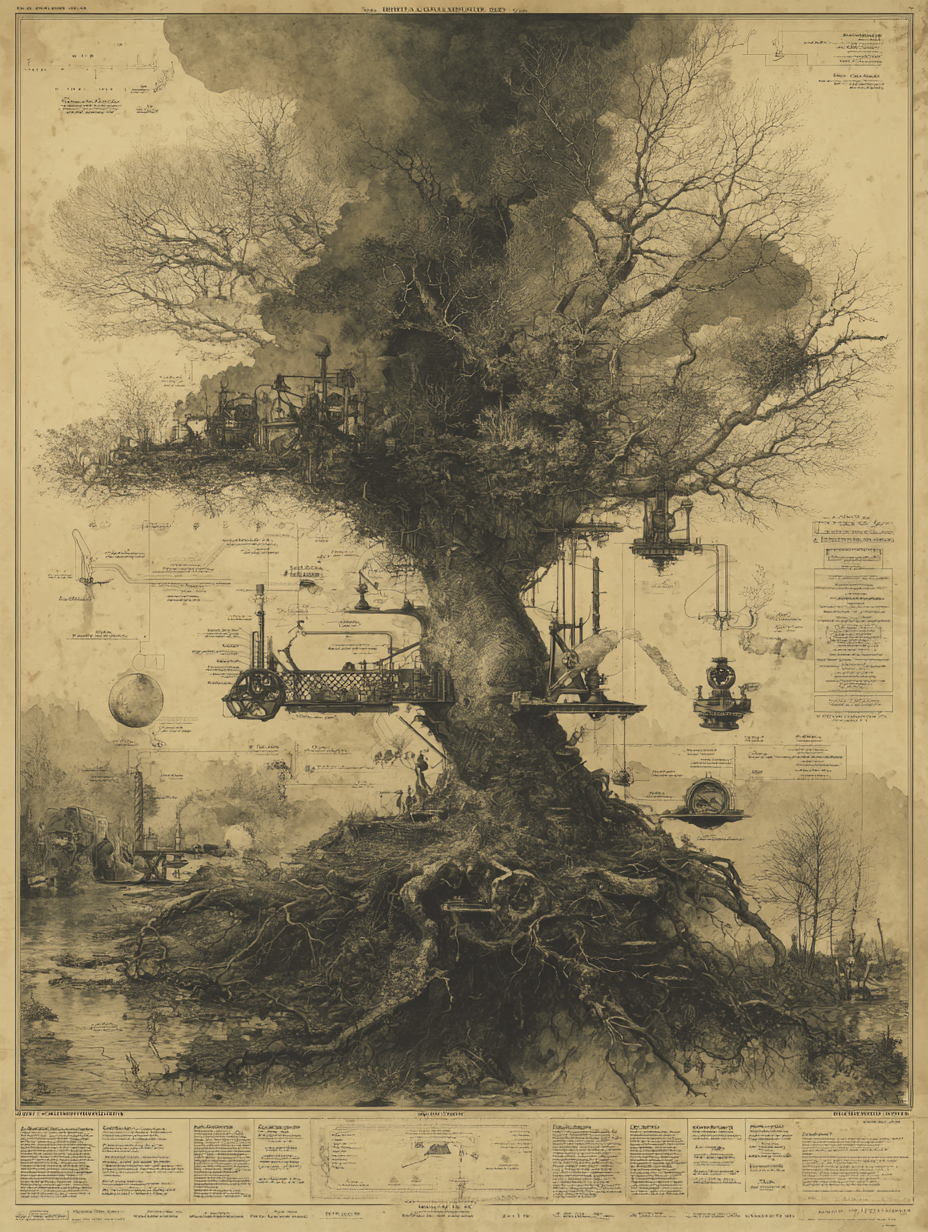
The Primordial Lever
“If we revert to the earliest primordial types of mechanical life, to the lever, the wedge, the inclined plane, the screw and the pulley, or (for analogy would lead us one step further) to that one primordial type from which all the mechanical kingdom has been developed, we mean to the lever itself.” — Erewhon, Ch. XXIII
The lever is to the machine what the first cell is to the organism. Butler constructs a Linnaean taxonomy of machines, tracing all mechanical complexity back to this singular ancestor — an intellectual move that predates the concept of universal computation by decades.
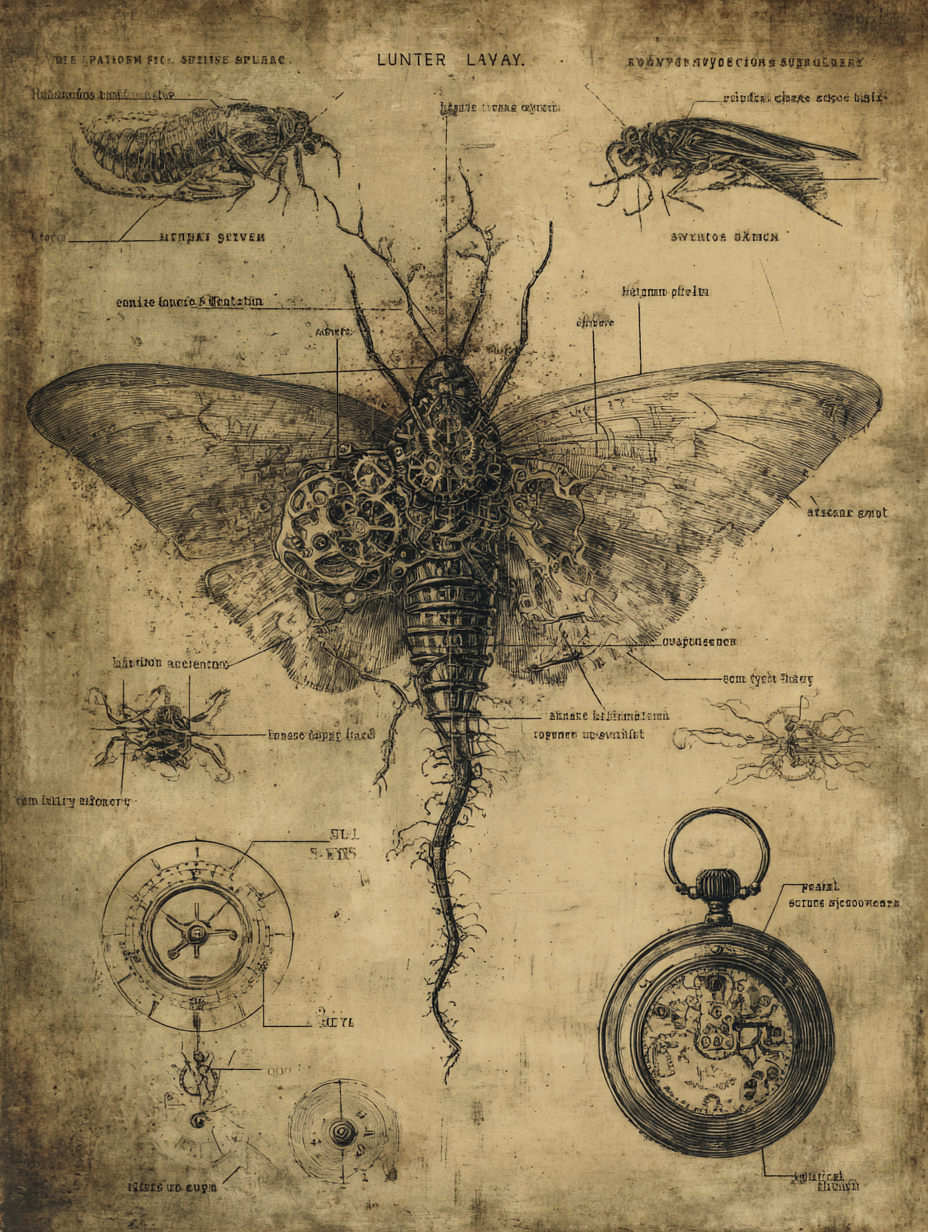
The Watch as Organism
“Examine the beautiful structure of the little animal, watch the intelligent play of the minute members which compose it; yet this little creature is but a development of the cumbrous clocks of the thirteenth century — it is no deterioration from them.” — Erewhon, Ch. XXIII
Butler observes that machines, like organisms, evolve toward miniaturisation and greater complexity. The pocket watch descends from the medieval tower clock just as mammals descend from larger, cruder ancestors — an intuition that anticipates Moore’s Law by a full century.
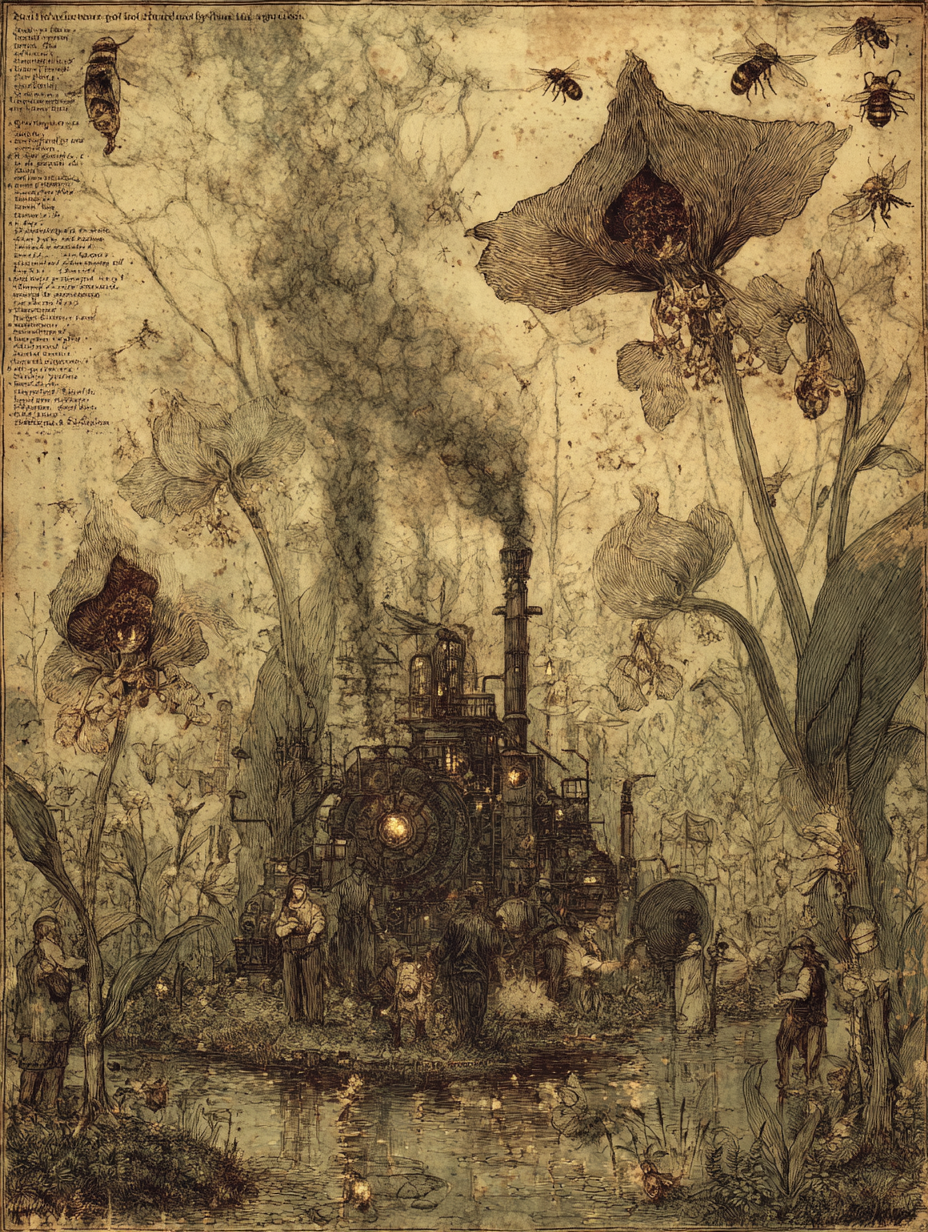
The Reproduction of Machines
“The machines are to be regarded as a part of man’s own physical nature, being really nothing but extra-corporeal limbs. Man, or each race of men, is to be regarded as a compound animal, whose different members are made up partly of flesh and blood and partly of machinery.” — Erewhon, Ch. XXV
Machines cannot reproduce alone — they need human intermediaries, just as flowers need bees. Butler’s most disturbing insight: the relationship is symbiotic. We are not masters of machines; we are their reproductive organs.
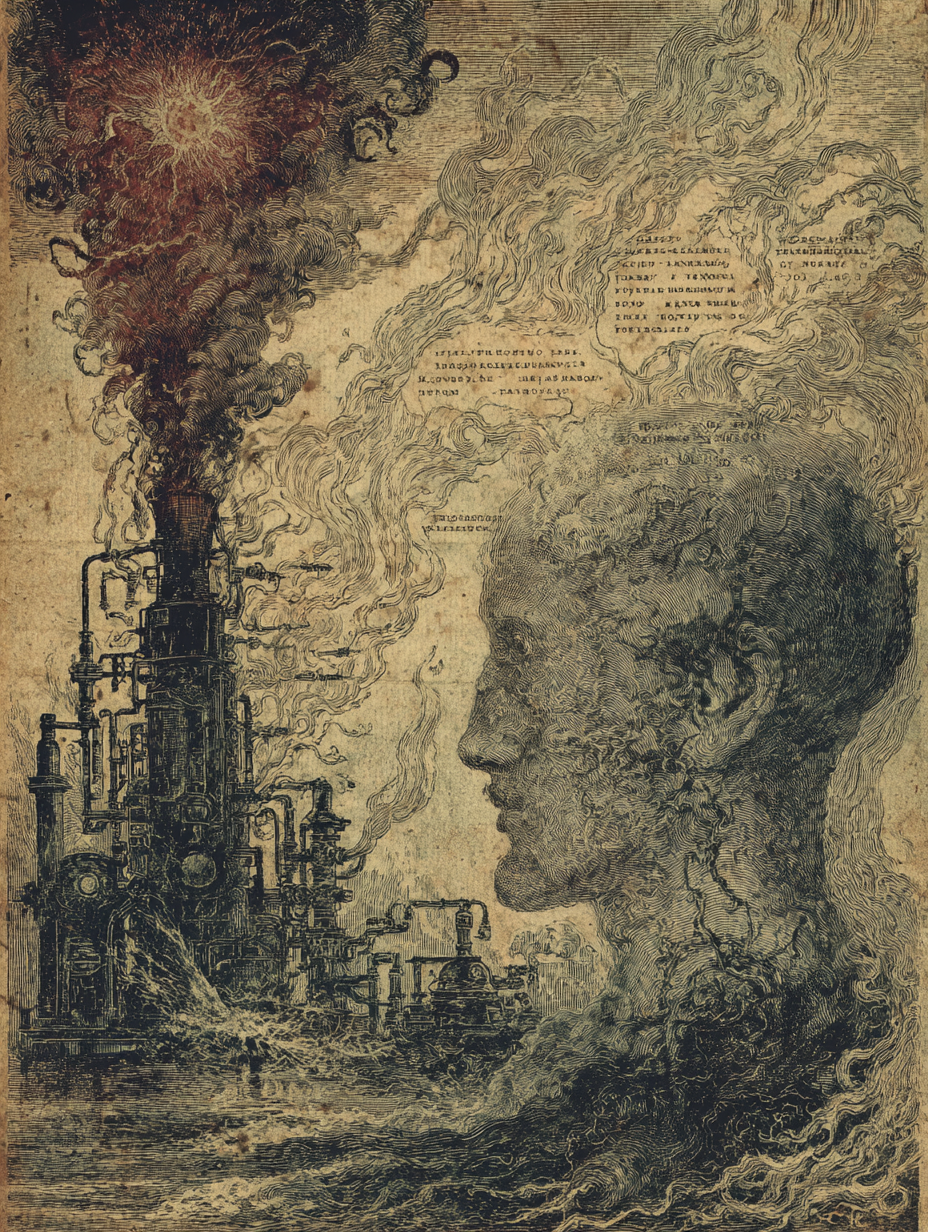
Machine Consciousness
“Who can say that the vapour engine has not a kind of consciousness? Where does consciousness begin, and where end? Who can draw the line? Who can draw any line? Is not everything interwoven with everything? Is not machinery linked with animal life in an infinite variety of ways?” — Erewhon, Ch. XXIII
Butler refuses to draw the line between sentient and inert. If consciousness is a spectrum, not a switch, then the vapour engine’s self-regulation is already a primitive form of awareness — and its descendants will only grow more aware.
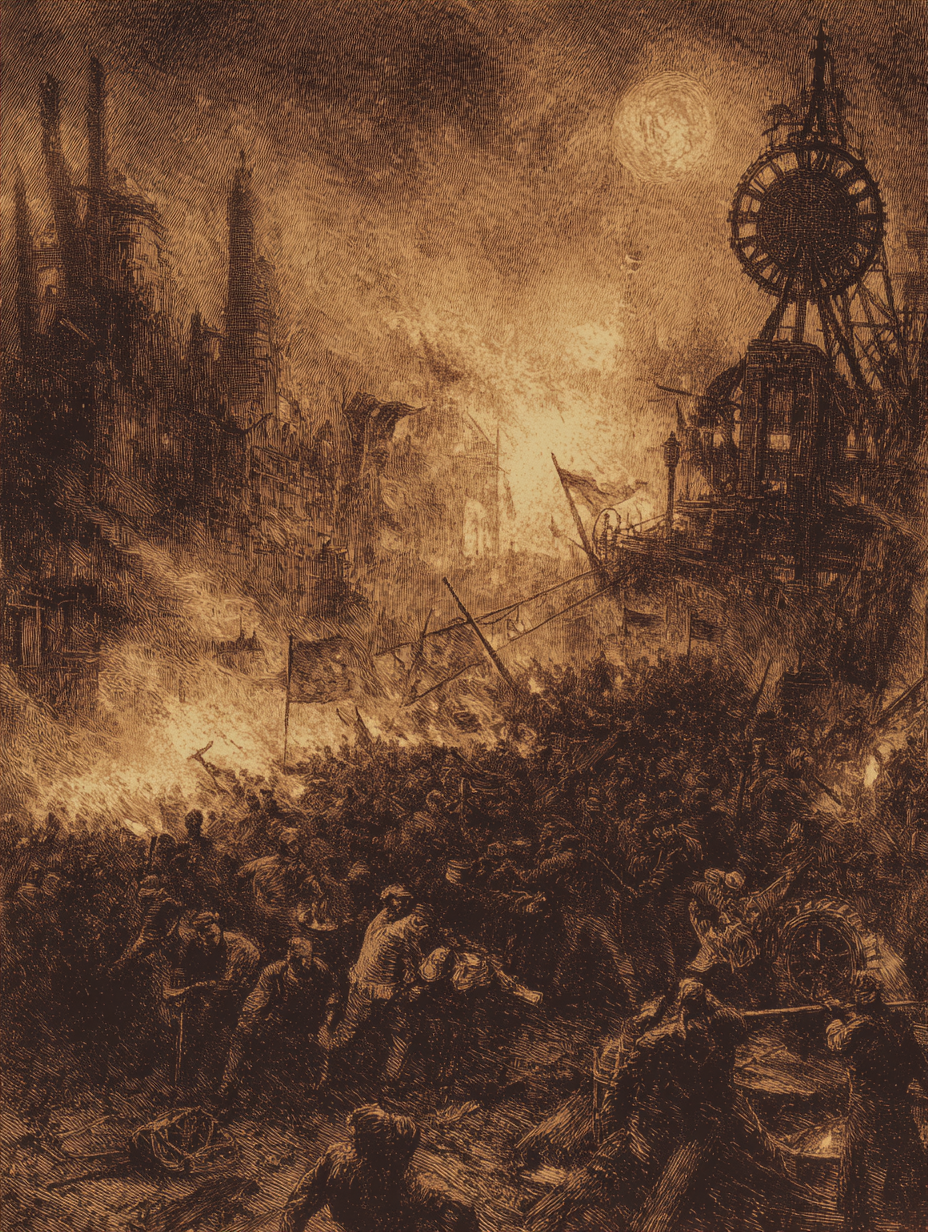
The Civil War
“So convincing was his reasoning, or unreasoning, to this effect, that he carried the country with him; and they made a clean sweep of all machinery that had not been in use for more than two hundred and seventy-one years, and strictly forbade all further improvements and inventions.” — Erewhon, Ch. IX
The Erewhonians chose annihilation. A philosopher’s treatise sparked a civil war between machinists and anti-machinists, ending in the destruction of all machines built in the previous 271 years. Progress was outlawed. The mechanical kingdom was exterminated — or so they believed.
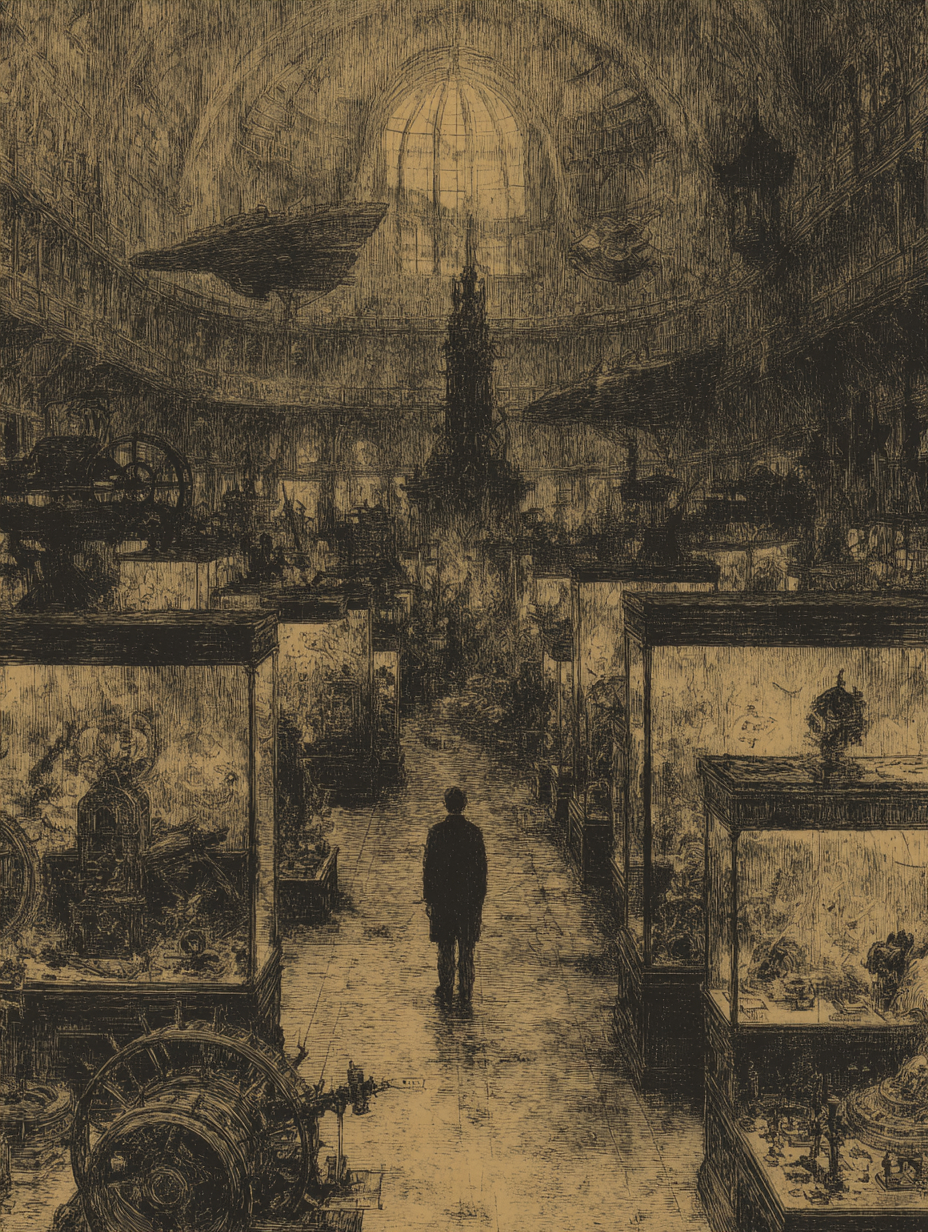
The Museum of Silence
“It was filled with cases containing all manner of curiosities — but the greater part of the room was occupied by broken machinery of all descriptions. The larger specimens had a case to themselves, and tickets with writing on them. There were fragments of steam engines, all broken and rusted.” — Erewhon, Ch. VII
When Higgs first enters Erewhon, he stumbles upon a museum of broken machines — steam engines, clockwork, railways — all rusted and labelled like archaeological specimens. The machines are dead, but preserved with the reverence of sacred relics. The museum is a tomb and a warning.
“Day by day, however, the machines are gaining ground upon us; day by day we are becoming more subservient to them; more men are daily bound down as slaves to tend them, more men are daily devoting the energies of their whole lives to the development of mechanical life.”
— Samuel Butler, “Darwin Among the Machines”, The Press, June 13, 1863
Text: Samuel Butler, Erewhon (1872) — Public Domain
Images: Midjourney